
YouTube is officially expanding its advanced likeness detection technology to a pilot group comprising government officials, political candidates, and journalists. Announced this Tuesday, the initiative empowers these public figures to identify unauthorized AI-generated content and request its removal if the material violates platform policies.
How the Technology Operates
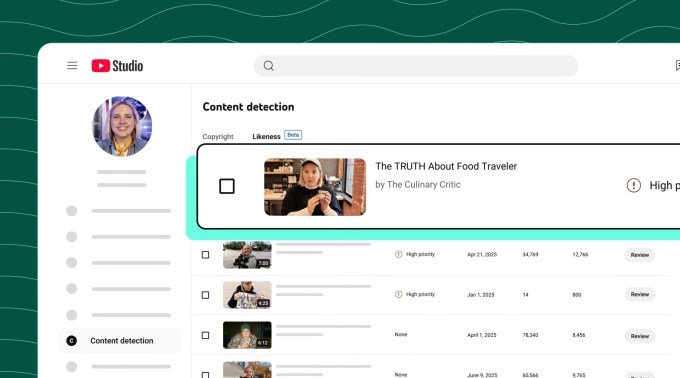
The system builds upon the infrastructure launched last year for the 4 million creators enrolled in the YouTube Partner Program. Similar to the platform’s Content ID system—which scans for copyrighted audio and video—this feature specifically targets simulated faces created by AI tools. These deepfakes are increasingly used to spread misinformation by depicting notable figures saying or doing things that never occurred in reality.
Leslie Miller, YouTube’s vice president of Government Affairs and Public Policy, emphasized that the program seeks to protect the integrity of public discourse. While providing this “shield,” the platform maintains a rigorous review process. Not every flagged video will be removed; YouTube evaluates requests against its privacy guidelines to preserve protected content, such as parody or political critique.
Verification and Future Expansion
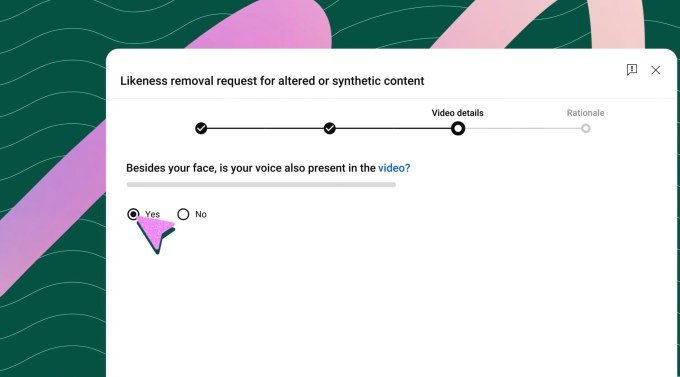
To participate in the pilot, eligible users must verify their identity by submitting a selfie and government-issued documentation. Once verified, they gain access to a dashboard where they can review detected matches and submit removal requests. YouTube plans to eventually evolve this tool to allow for proactive blocking of unauthorized uploads, potentially mirroring the monetization features currently available through Content ID.
Labeling and Regulatory Advocacy
YouTube continues to apply disclosure labels to AI-generated content, though placement varies based on the nature of the video. Content involving “sensitive topics” receives more prominent on-screen disclaimers, while more benign AI usage may only be noted in the video description.
Beyond internal tools, the company is actively supporting federal legislation, including the NO FAKES Act, which aims to regulate the unauthorized replication of visual likenesses and voices. While the volume of removal requests from the initial creator pilot has been minimal, the company anticipates that the risks posed to politicians and journalists may necessitate a more robust response.
Looking ahead, YouTube intends to scale this detection technology to include the identification of synthetic voices and other intellectual property, such as copyrighted character likenesses.