

Zoom is set to redefine virtual collaboration this month with the launch of its highly anticipated photorealistic AI avatars. Announced on Tuesday, these digital twins are designed to mimic a user’s appearance, eye movements, and facial expressions, providing a solution for professionals who need to maintain a presence in meetings or asynchronous video messages even when not “camera-ready.”
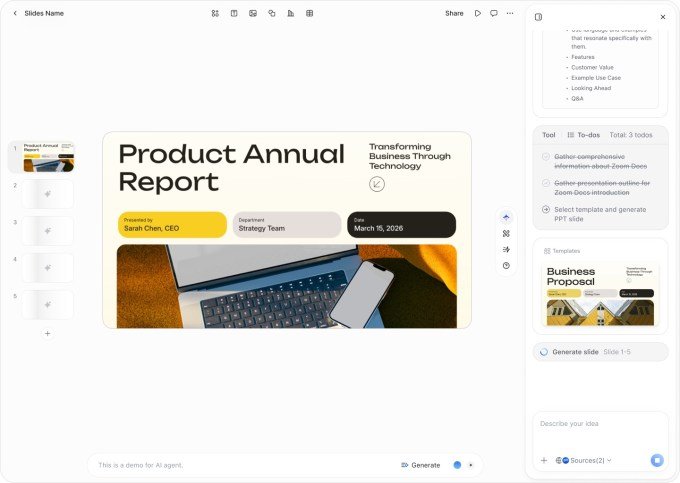
Alongside these avatars, the company is rolling out an aggressive suite of AI-powered productivity tools, including dedicated apps for Docs, Slides, and Sheets. These tools leverage meeting transcripts and historical data to automate the drafting of documents, spreadsheets, and presentations.
Enhanced Security and AI Productivity
Addressing the risks associated with synthetic media, Zoom is integrating advanced deepfake-detection technology. This feature will automatically alert meeting participants to potential audio or video impersonation, ensuring greater security in an era of sophisticated AI manipulation.
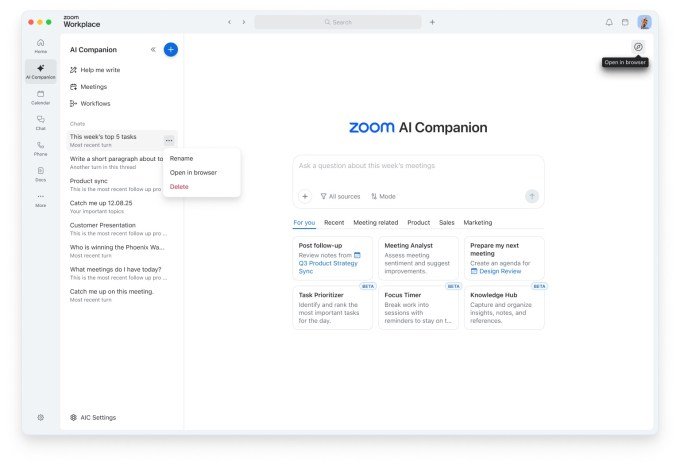
The company’s productivity push also includes the expansion of AI Companion 3.0 to its desktop application. Following a successful web launch last September, the assistant has seen its monthly active user base triple year-over-year in Q4 FY 2026. This intelligence is also coming to Workvivo, Zoom’s employee communication platform, allowing users to query data across integrated services like Slack, Salesforce, ServiceNow, Gmail, Outlook, Asana, and Jira.
Custom Agents and Developer APIs
Zoom is further embracing the shift toward agentic workflows by enabling users to build custom AI agents via natural language prompts. Once configured, these agents can be tagged directly in chat to execute tasks across various platforms. For developers, the company is also opening access to its speech, vision, and language intelligence APIs, which can be deployed either on-premise or in the cloud.
To streamline the user experience, Zoom is unifying its design across desktop, mobile, and web. This update aims to provide seamless access to critical AI-driven features, such as automated meeting notes, transcription services, and intelligent thread summarization, positioning the platform as a direct competitor to other AI-first office software providers like Canva and Slack.