

World Labs, the high-profile startup led by AI pioneer Fei-Fei Li, has officially launched Marble, its premier commercial world model. The platform enables users to transform text prompts, photos, videos, and 3D layouts into fully editable, downloadable 3D environments. Available via freemium and paid tiers, the release marks a significant milestone for the company, which emerged from stealth a year ago with $230 million in funding.

Redefining Generative World Models
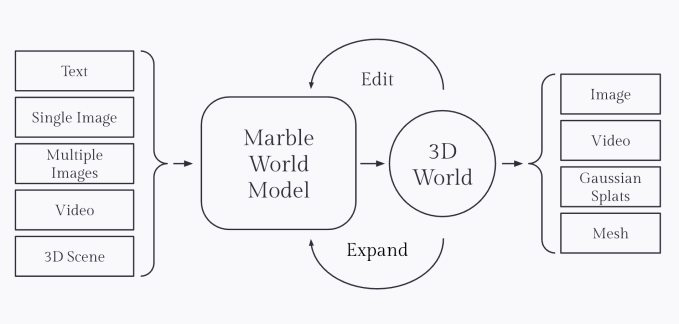
Unlike existing research-focused models such as Google’s Genie or various real-time demos from competitors, Marble focuses on persistence. Instead of generating worlds on-the-fly, which often leads to visual morphing or inconsistency, Marble creates stable, downloadable 3D assets. Users can export these environments as Gaussian splats, meshes, or high-fidelity videos.
The platform introduces a hybrid 3D editor, allowing for “spatial intelligence” that decouples structure from visual style. This approach provides creators with granular control, moving beyond the “black box” limitations of typical generative AI.
Creative Control and Advanced Editing
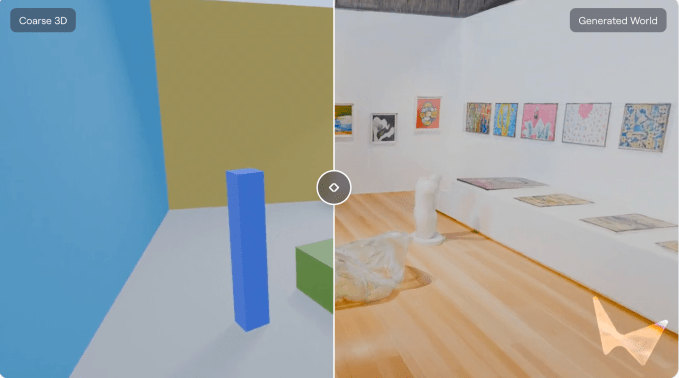
A standout feature is Chisel, an experimental tool that lets users define coarse spatial layouts—such as walls or platforms—before the AI fills in the aesthetic details. This functionality allows for direct object manipulation, enabling users to move or rearrange elements within the generated scene.
Furthermore, the platform supports “scene expansion,” where users can request the model to generate additional detail in specific regions of an existing world. For large-scale projects, “composer mode” allows for the stitching together of multiple distinct environments, such as combining a futuristic meeting room with a stylized fantasy space.
Industry Impact and Future Potential
While the gaming industry remains cautious regarding AI integration—citing concerns over intellectual property and job displacement—World Labs positions Marble as an asset-creation tool rather than a full pipeline replacement. Developers can import these AI-generated environments into engines like Unity or Unreal to handle complex logic and interactivity.
Beyond gaming, the technology holds promise for VFX, robotics simulation, and VR. Marble is already compatible with headsets like the Apple Vision Pro and Meta Quest 3. Fei-Fei Li views this as a vital step toward “spatial intelligence,” a field she argues is essential for the next generation of machines to understand and interact with the physical world, potentially impacting fields as diverse as medicine and scientific research.
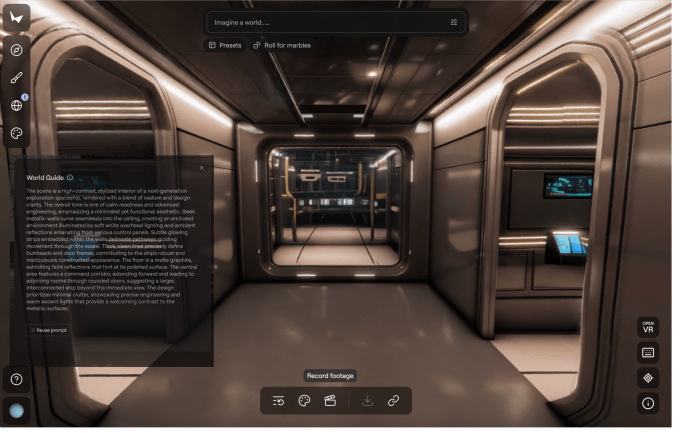
Marble is available in four tiers, ranging from a Free version to a “Max” subscription ($95/month) offering 75 generations and full commercial rights. As the model evolves, World Labs aims to bridge the gap between simple text-to-image generation and the complex, interactive 3D realities required for the future of intelligent systems.