

Google DeepMind is establishing a specialized team dedicated to building generative AI models capable of simulating the physical world. The initiative is led by Tim Brooks, a former co-lead of OpenAI’s Sora project, who joined the Google research lab in October.
The mission, confirmed by Brooks in a recent announcement, focuses on developing massive generative models that can replicate real-world environments. This new division will operate under the DeepMind umbrella, integrating research from Google’s existing AI powerhouses, including Gemini, Veo, and Genie.
Scaling Toward Artificial General Intelligence
The development of “world models” is considered a critical milestone in the pursuit of Artificial General Intelligence (AGI). According to internal job listings, the team aims to scale models to the highest levels of compute, utilizing video and multimodal data to achieve human-level task performance.
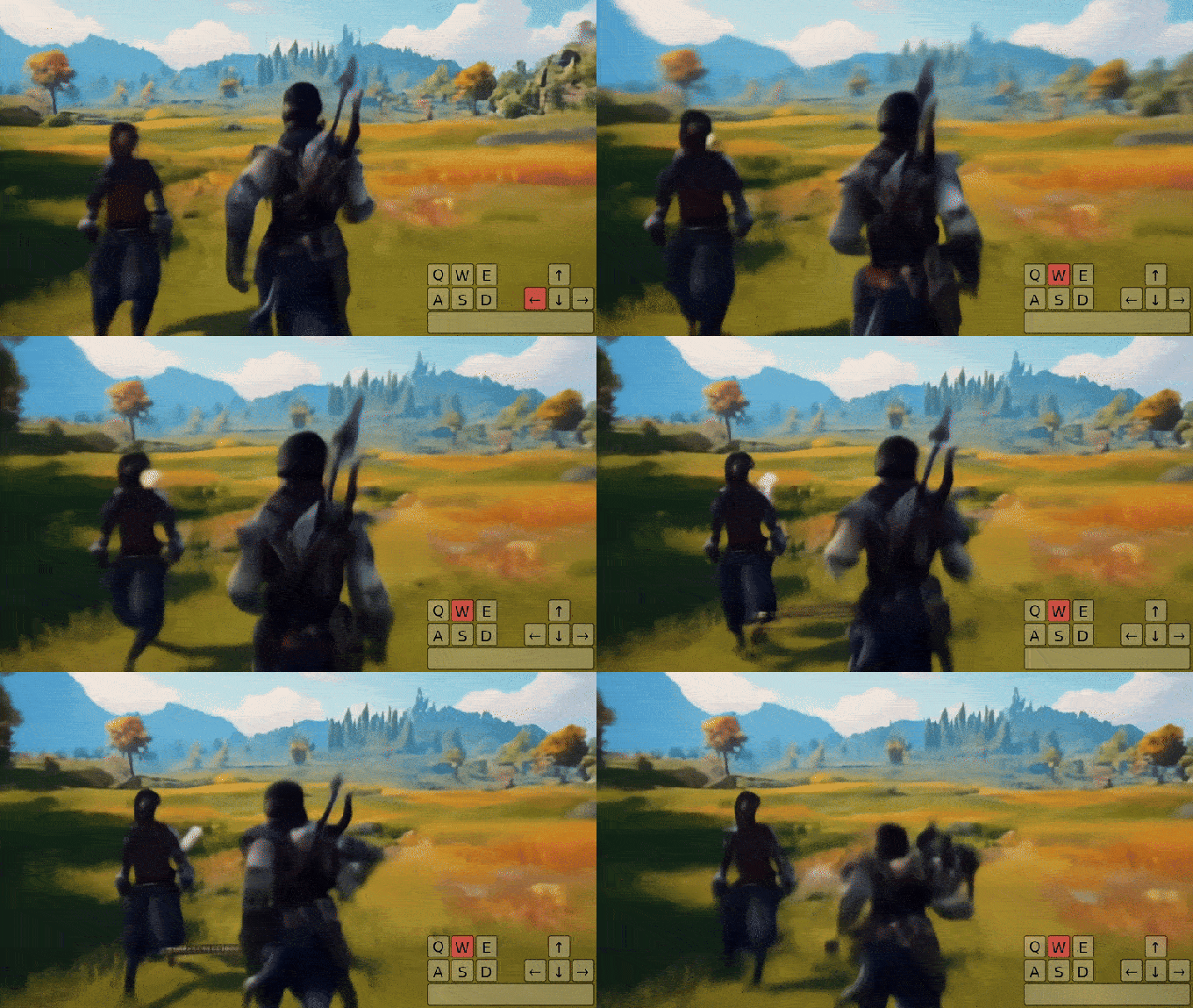
These models are designed to power diverse applications, ranging from visual reasoning and robotic planning to real-time interactive entertainment. By leveraging Google’s Genie—which can already generate playable 3D environments—the new team intends to build “real-time interactive generation” tools that merge seamlessly with multimodal systems like Gemini.
The Competitive Landscape
Google is not alone in this race. The push for world-simulation technology has attracted significant investment from both startups and established tech giants. Companies such as World Labs, led by AI researcher Fei-Fei Li, alongside Decart and Odyssey, are actively developing systems to create hyper-realistic simulations for video games, films, and robotic training environments.
Ethical and Legal Hurdles
Despite the technological promise, the rapid advancement of world models faces scrutiny from the creative industry. Recent investigations, including reports from Wired, highlight concerns regarding job displacement within gaming and animation sectors. A 2024 study from the Animation Guild projected that over 100,000 jobs in the U.S. entertainment sector could be disrupted by generative AI by 2026.
Furthermore, copyright issues remain unresolved. Because these models are often trained on vast quantities of video—including game playthroughs—legal challenges regarding unlicensed data usage are likely. While Google maintains that its training practices on YouTube content align with its terms of service, the company has yet to disclose specific datasets used for training its models, leaving the industry waiting for transparency.