
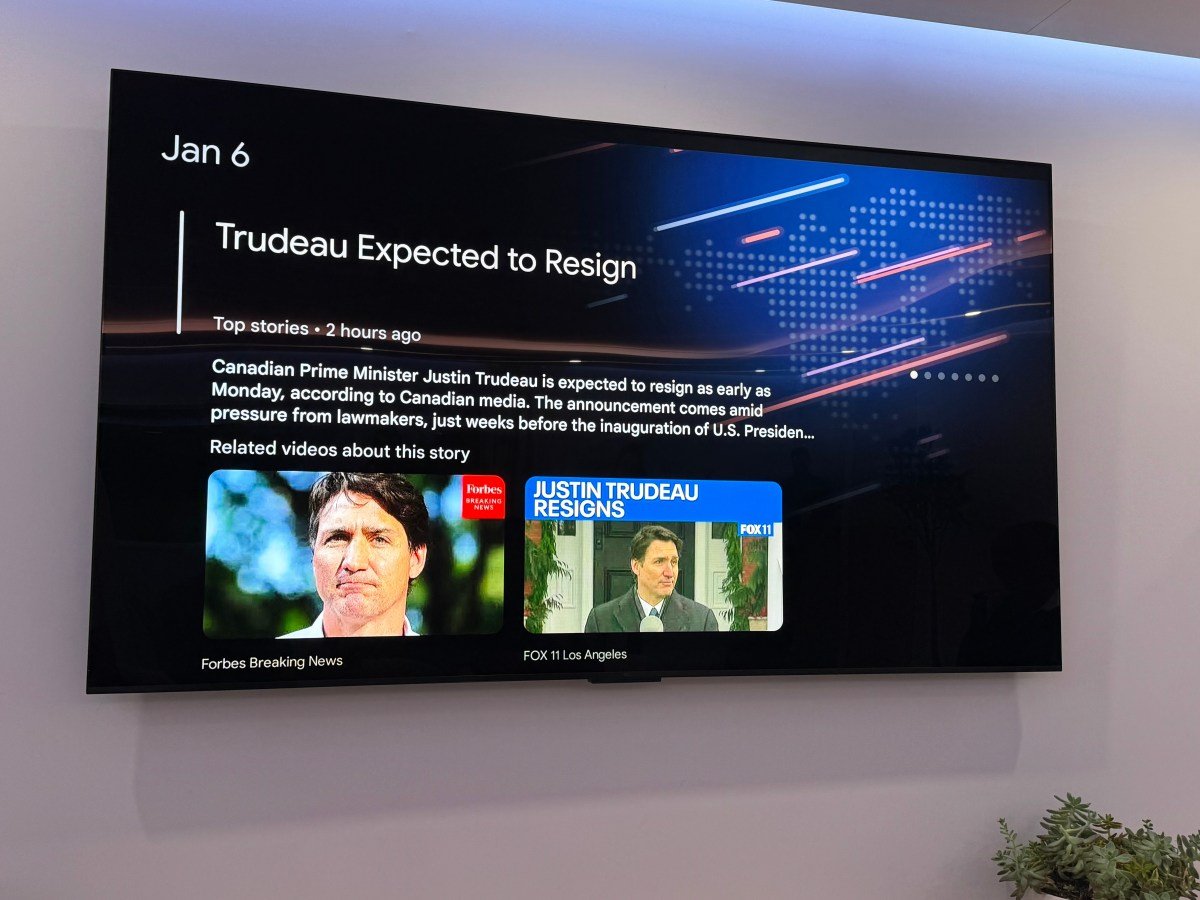
Google officially unveiled a major update to its TV operating system at CES 2025 on Monday, introducing deep integration with its Gemini AI assistant. The new feature, dubbed “News Brief,” allows users to receive automated, AI-generated summaries of the day’s top headlines directly on their television screens.
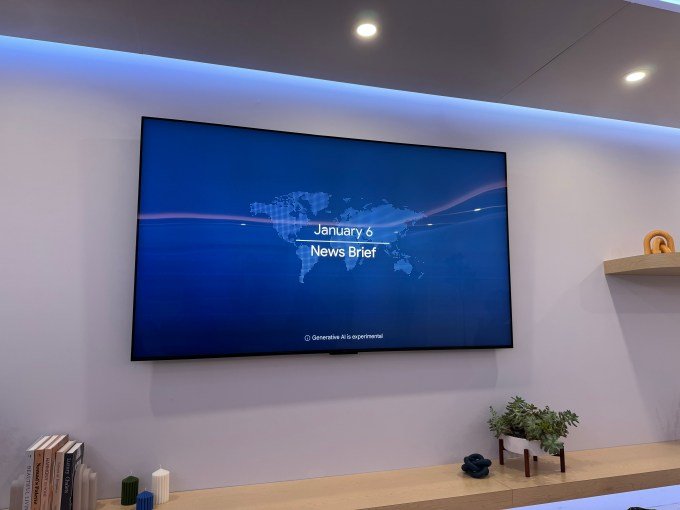
How the AI News Brief Works
By simply asking Gemini to play a “News Brief,” the system aggregates content from across the web and curated YouTube video headlines from trusted news organizations. The AI then synthesizes this data into a concise digest, keeping viewers updated on current events without the need for traditional news broadcasts.
During demonstrations, the feature showcased its ability to summarize breaking news, such as the resignation of Canadian Prime Minister Justin Trudeau and ongoing events on Capitol Hill. While the tool pulls from web-wide sources and YouTube, it currently does not explicitly display citations for the information provided.

Navigating the Risks of AI Hallucinations
Google’s move into AI-generated news comes at a time of heightened industry tension. Major tech firms, including OpenAI and Microsoft, are currently embroiled in legal battles regarding the licensing and attribution of content used to train their models. Furthermore, the risk of “hallucinations”—where AI generates false or misleading information—remains a significant hurdle.
Recent high-profile errors, such as Apple’s AI misinterpreting a BBC report to create a false headline regarding Rafael Nadal, and Google’s own past issues with Gemini suggesting dangerous cooking advice, underscore the volatility of this technology. Despite these challenges, Google is moving forward with a broader vision for interactive, AI-driven television.
The Future of Interactive TV
The News Brief feature is only the beginning of Google’s push for a more interactive living room experience. The company plans to roll out these Gemini capabilities to both new and existing Google TV devices by the end of 2025. Future updates will include hardware sensors capable of detecting when a user enters the room, enabling the TV to respond to natural language queries for shows, movies, and YouTube content with personalized AI-generated summaries.