
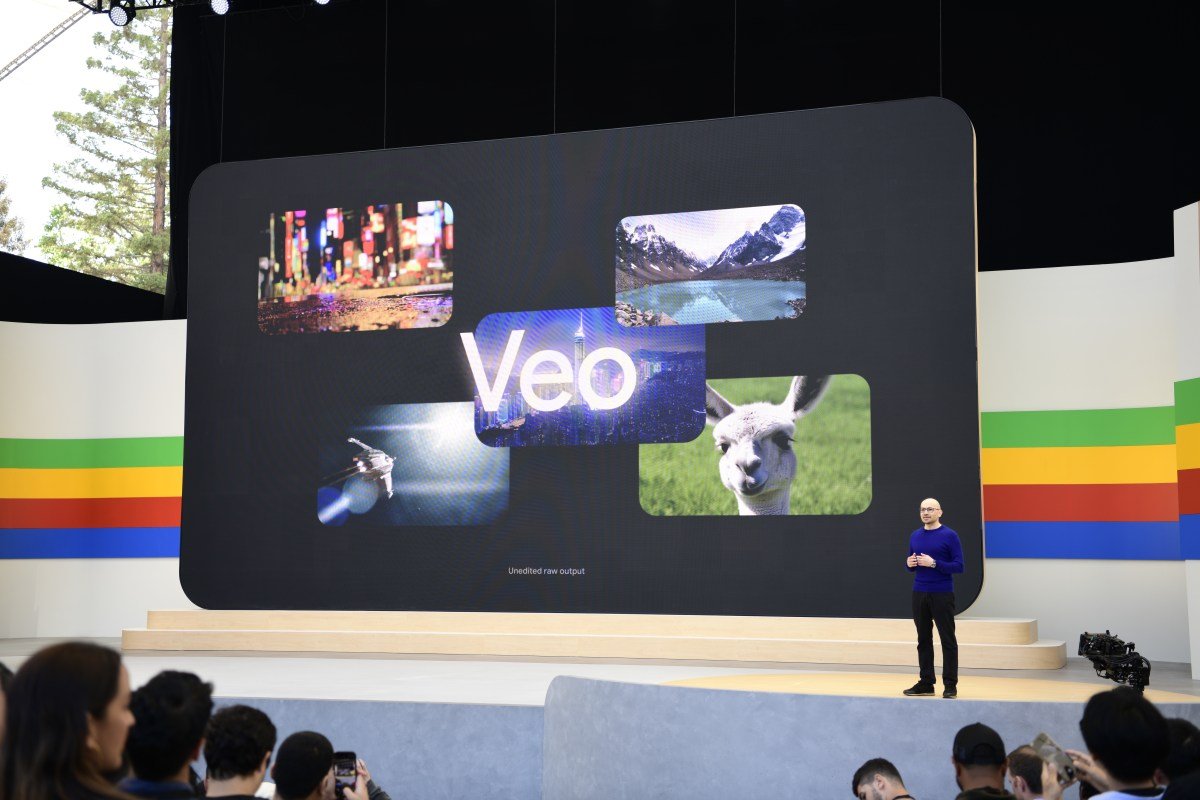
Demis Hassabis, CEO of Google DeepMind, has sparked industry speculation that the company’s latest video-generation model, Veo 3, could serve as the foundation for interactive, playable video game worlds. The suggestion emerged Tuesday evening following a social media exchange regarding the potential for AI-generated gaming environments.
Responding to a user request on X to turn Veo 3 videos into playable games, Hassabis teased the possibility with the comment: “now wouldn’t that be something.” The intrigue deepened Wednesday morning when Logan Kilpatrick, lead product for Google’s AI Studio and Gemini API, replied with a series of zipped-lip emojis, signaling potential internal developments.
now wouldn't that be something… https://t.co/WBeCMQye91
— Demis Hassabis (@demishassabis) July 2, 2025
From Passive Video to Interactive Simulation
While Google spokespeople maintain that there is nothing to announce, the technical gap between current generative models and “world models” is narrowing. Traditional video-gen models, like Veo 3, synthesize realistic sequences. In contrast, world models act as simulators that understand physical dynamics, allowing agents to predict how an environment evolves based on user input.
Google has already laid the groundwork for this transition. The company is currently working to evolve its Gemini 2.5 Pro foundation model into a system capable of simulating human-brain-like complexity. Furthermore, DeepMind previously unveiled Genie 2, an AI specifically designed to generate an endless variety of playable 2D and 3D worlds.
The Technical Hurdle: Real-Time Physics
Veo 3, currently in public preview, excels at creating high-fidelity video and synchronized audio. While it successfully simulates real-world physics to create realistic movement, it remains a “passive output” model. Transforming it into a gaming engine would require a shift toward active, interactive, and predictive simulation.
Industry experts suggest that Google may adopt a hybrid architecture, combining the visual prowess of Veo with the structural simulation capabilities of Genie. The primary challenge remains achieving real-time consistency and user control, which are essential for true gameplay.
A Competitive Landscape
Google is not alone in the race to build the next generation of digital simulations. The field is rapidly becoming crowded with heavyweights:
- World Labs: Founded by AI pioneer Fei-Fei Li, this startup is already generating 3D game-like scenes from single images.
- OpenAI: Their Sora model is viewed as a direct contender in the video-as-simulator space.
- Corporate Rivals: Companies such as Microsoft, Scenario, Runway, and Pika are all aggressively pursuing similar technology.
Given Google’s track record of leveraging massive infrastructure and deep-pocketed resources to dominate emerging tech sectors, the industry is watching closely to see if the company will pivot its generative AI portfolio into the next frontier of interactive entertainment.