
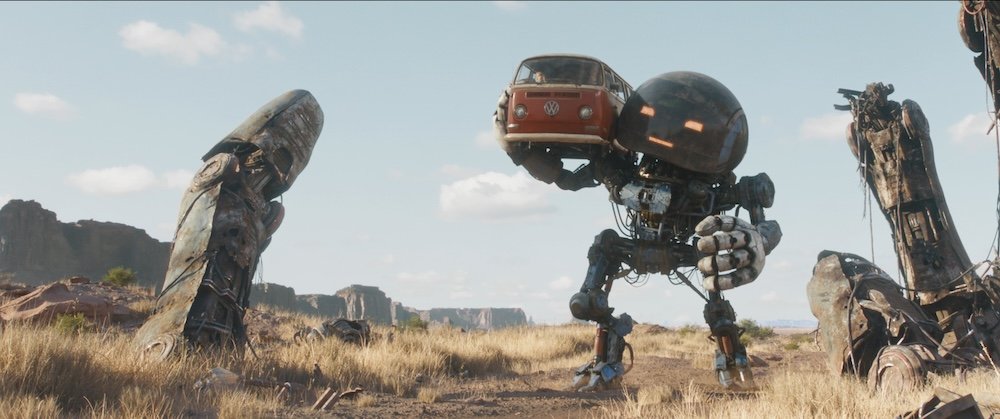
Netflix’s latest blockbuster, The Electric State, introduces a reimagined 1990s where sentient robots have coexisted with humans for decades. Directed by Anthony and Joe Russo with a reported $320 million budget, the film follows stars Millie Bobby Brown and Chris Pratt as they navigate an alternate reality where discarded, post-rebellion machines occupy an isolated region of the Southwest.
Designing the Antithesis of Modern Robotics
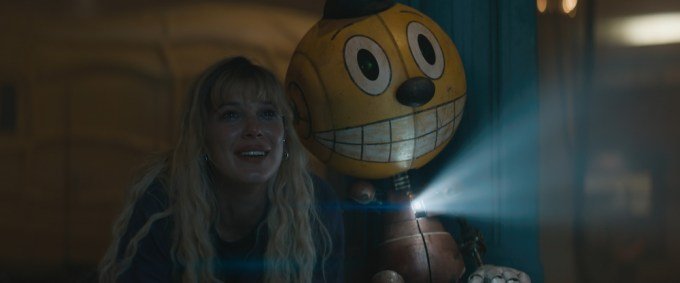
For visual effects supervisor Matthew E. Butler, the mandate was clear: these machines had to be the functional opposite of today’s real-world technology. While modern industry leaders like Boston Dynamics focus on centralizing mass for stability and efficiency, the robots in The Electric State—such as the key character Cosmo—feature impractical, top-heavy designs.
“Cosmo has a giant head on a tiny neck,” Butler explained. “It is technically the worst design for a robot.” Inspired by Simon Stålenhag’s illustrated novel, these machines were engineered to appear “unthreatening,” opting for a cutesy, goofy aesthetic that contrasts with their complex internal history.
Engineering Believability in Impractical Forms
To ground these whimsical designs in a tangible reality, Butler’s team focused on “silhouette fidelity.” At a distance, the robots mirror the art of the original novel, but close-up inspection reveals a functional reality. Audiences can spot intricate push rods, motors, and circuitry within the joints, creating a visual logic that suggests the machines could actually operate despite their awkward proportions.
The Complex Workflow of Digital Performance
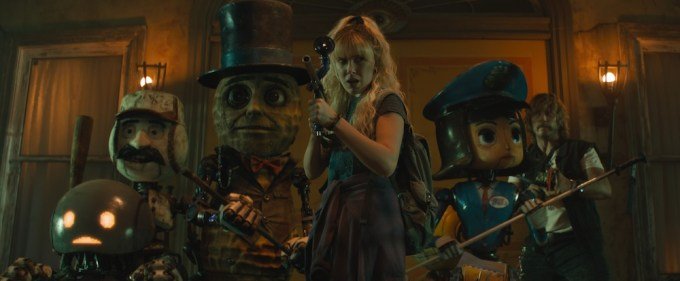
Bringing “hundreds and hundreds” of unique robot characters to life required a labor-intensive pipeline. Because each robot in the film is treated as a distinct individual rather than a generic background model, the team could not rely on simple shortcuts. The production utilized a hybrid system combining traditional optical motion capture with advanced accelerometer-based suits.
This setup allowed a troupe of seven performers to interact directly with the human actors on set. However, the process didn’t end with the capture:
- Design Constraints: Performers’ movements were adapted to match the specific physical limitations of each robot’s unique chassis.
- Director Vision: The Russo brothers requested character-specific tweaks to ensure every machine felt like a distinct personality.
- Voice Integration: The cadence and rhythm of the robots were adjusted to synchronize with the performances of the voice cast, ensuring the physical movement matched the vocal tone.
By blending these layers of performance, design, and technical engineering, the VFX team transformed inherently impractical concepts into a living, breathing cast of characters that anchor the film’s alternate-history narrative.