
Spotify officially entered the independent publishing arena this Thursday, launching a new program that enables authors to submit short-form stories for professional audiobook production. By selecting and producing these works, Spotify aims to broaden its catalog while directly challenging market leader Audible.
How the Spotify Publishing Program Works
Once a story is selected, Spotify assumes full responsibility for the production and distribution of the audiobook across major retail platforms. In return for the rights, the company provides authors with both an upfront advance and ongoing royalties. Submissions are reviewed on a rolling basis, allowing for a continuous expansion of their library.
Submission Guidelines and Genre Focus
Spotify is currently targeting specific genres, including romance, mystery/thriller, and sci-fi/fantasy. The company is particularly interested in cross-genre narratives—such as “romantasy,” dark romance thrillers, or psychological sci-fi—following the massive success of titles like A Court of Thorns & Roses, which dominated the platform’s charts in 2024.
To qualify, submissions must meet the following criteria:
- Length: Novelettes between 10,000 and 20,000 words.
- Language: English only.
- Rights: Authors must hold the full audio rights to their work.
Note that the company has explicitly excluded erotica and children’s content from this initiative.
Strategic Expansion in the Audiobook Market
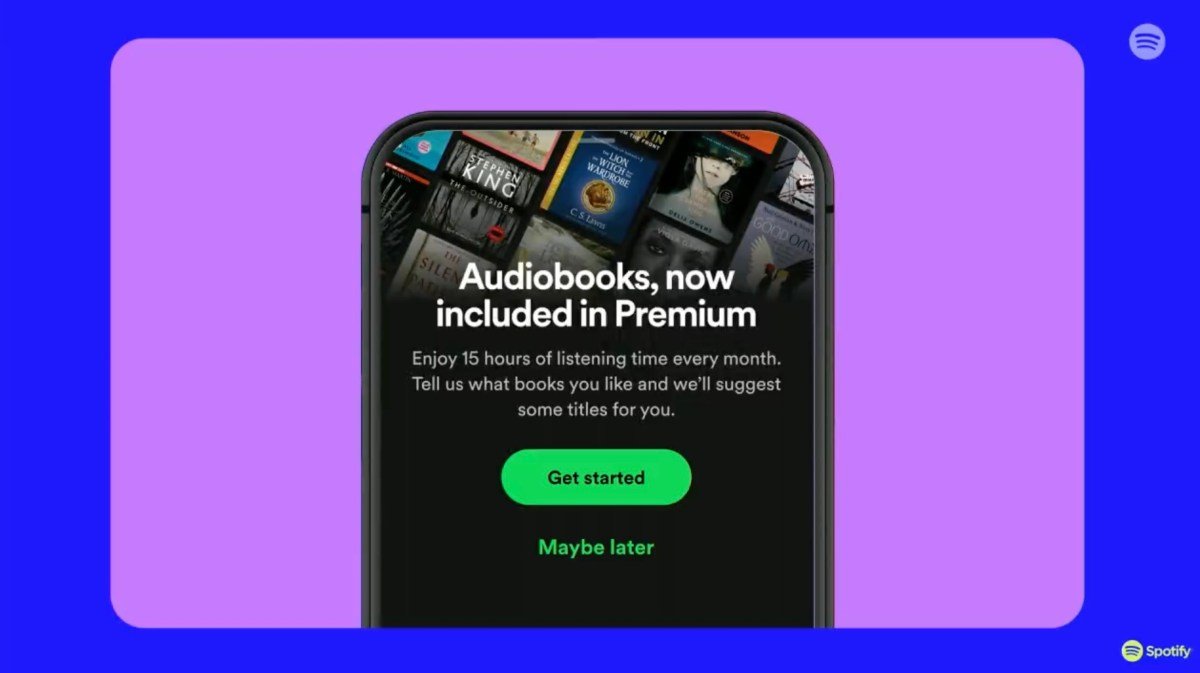
This move is the latest step in Spotify’s aggressive strategy to dominate the audiobook sector, which began in 2021 with the acquisition of digital distributor Findaway. Since then, the company has integrated audiobooks into its Premium subscription model, offering users 15 hours of listening time per month from a catalog of over 200,000 titles.
The tech giant has also been experimenting with AI-driven content, incorporating audiobooks narrated by ElevenLabs’ voice technology to further scale its offerings. By moving into original publishing, Spotify is positioning itself to compete more effectively with Audible’s exclusive “Audible Originals” library, which has long relied on shorter-form, proprietary content to retain subscribers.