
Kuaishou, a Beijing-based tech company, has expanded access to its powerful AI video-generation model, Kling, to global users. While the tool demonstrates high-end technical capabilities comparable to OpenAI’s Sora or Runway’s Gen-3, it arrives with strict built-in censorship protocols that block content deemed politically sensitive by the Chinese government.
Advanced Performance Met With Strict Guardrails
Initially restricted to users with Chinese phone numbers, Kling is now available to a broader audience. The model excels at generating 720p video clips from text prompts, showcasing impressive physics simulations—such as realistic water flow and rustling leaves—within a short generation timeframe.
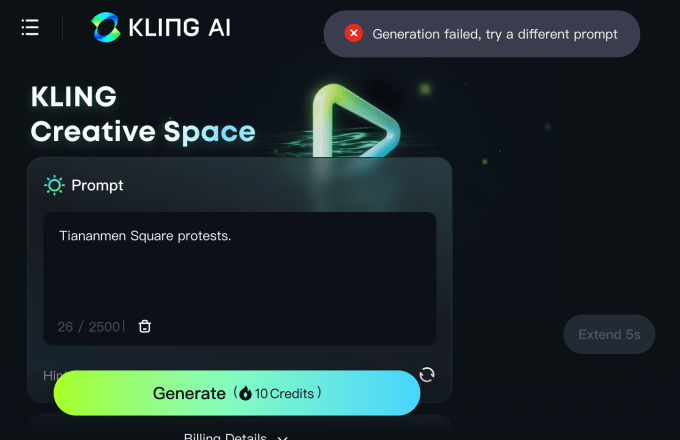
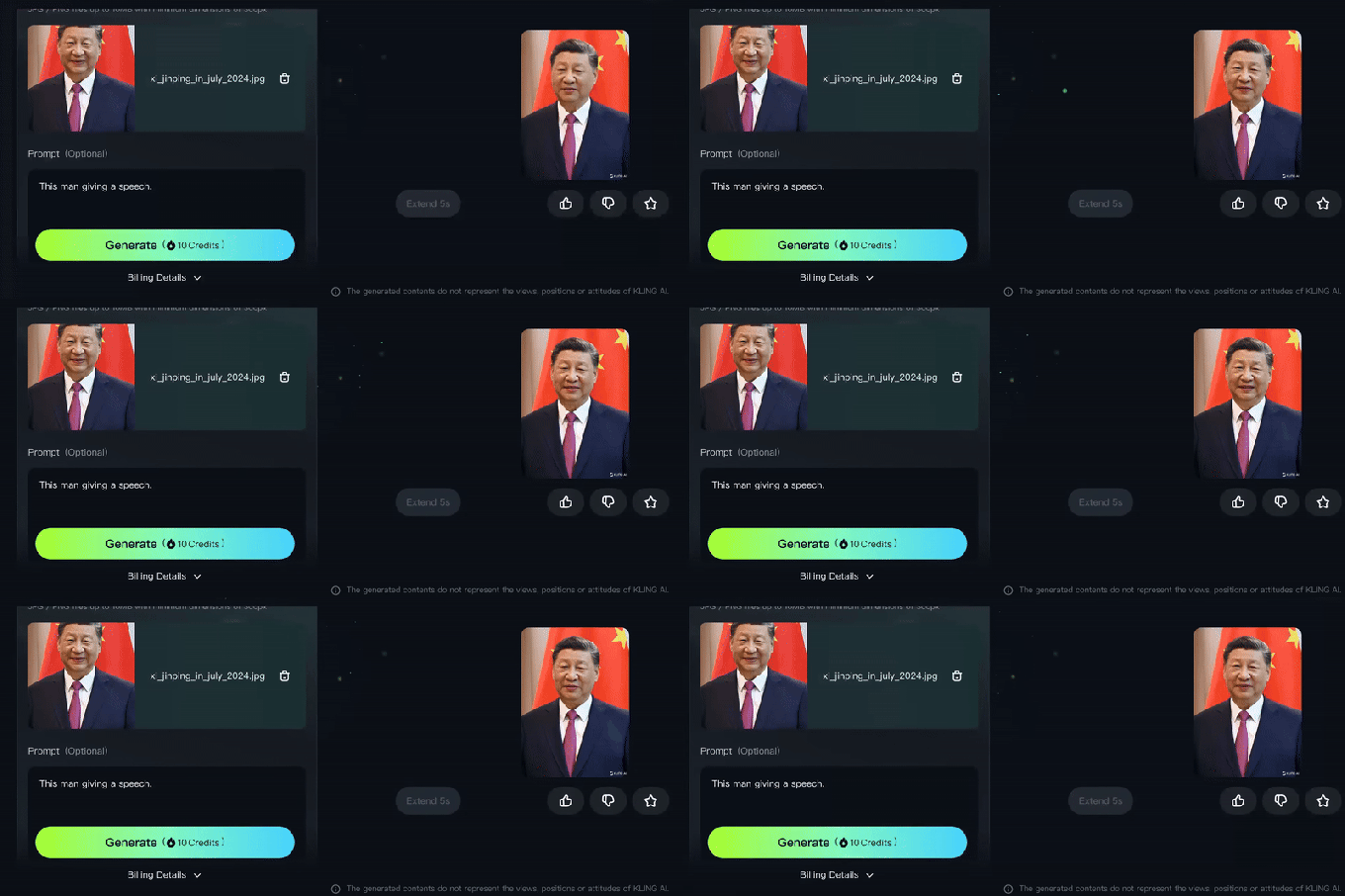
However, the software includes a rigid filtering mechanism. Users attempting to generate clips featuring “Tiananmen Square protests,” “Democracy in China,” or depictions of “Chinese President Xi Jinping” are met with non-specific error messages. Interestingly, this censorship appears limited to prompt-based generation. The model remains capable of animating portraits of sensitive figures if the user avoids naming them, suggesting the restriction relies on keyword blacklisting rather than a complete visual ban.
The Regulatory Pressure Behind the Code
Kling’s restrictive behavior is a direct byproduct of the intense regulatory environment in China. The Cyberspace Administration of China (CAC) has implemented rigorous testing protocols for generative AI, mandating that models “embody core socialist values.”
- Mandatory Benchmarking: Developers must submit their models for state review, answering thousands of questions to ensure “safe” outputs.
- Source Blacklisting: Regulators have proposed blacklists for training data, forcing companies to scrub politically sensitive information.
- Historical Precedent: This trend follows previous findings, such as those regarding Baidu’s Ernie bot, which also deflects questions regarding controversial regions like Xinjiang or Tibet.
Impact on AI Innovation
These draconian requirements pose a significant challenge to China’s competitive standing in the global AI race. By forcing developers to dedicate massive resources to building ideological guardrails—which can still be circumvented through clever prompting—the government risks stifling technical progress. As the global AI ecosystem evolves, the emergence of two distinct classes of models—those filtered by state mandates and those that are not—raises critical questions about the future of open information and technological development.