
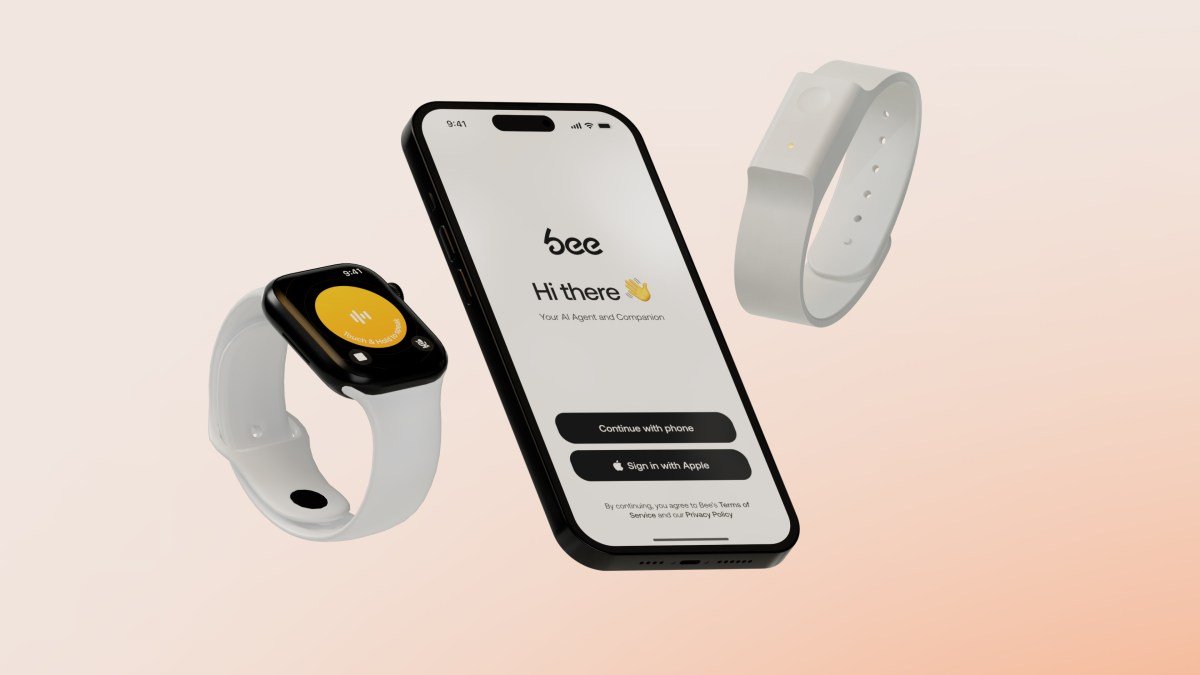
Amazon has officially entered the next phase of its artificial intelligence strategy by acquiring Bee, an innovative AI wearable designed to function as a clip-on pin or bracelet. Unveiled during this year’s Consumer Electronics Show (CES) in Las Vegas, the device represents a strategic shift for Amazon, moving its AI capabilities beyond the confines of the smart home and directly into the user’s daily life.
Expanding AI Beyond the Home
While Amazon already maintains a dominant position in the consumer AI market with Alexa—specifically the upgraded Alexa+ capable of running on 97% of existing hardware—the company has struggled to gain traction in the wearable segment. Previous attempts to integrate Alexa into earbuds and glasses have faced stiff competition from products like Apple’s AirPods and Ray-Ban Meta AI glasses.
Bee solves this by offering a dedicated, portable AI companion. Unlike stationary smart devices, Bee is engineered to record and process real-world interactions, such as meetings, lectures, and interviews, while simultaneously acting as a personal assistant that learns from the user’s habits and digital services, including Gmail, Google Calendar, and Apple Health.
A Synergistic Relationship: Bee and Alexa
Rather than replacing Alexa, Amazon views Bee as a complementary technology. According to Bee co-founder Maria de Lourdes Zollo, the two systems serve different environments: Bee focuses on the world outside the home, while Alexa manages domestic tasks. Amazon Alexa VP Daniel Rausch confirmed that the company intends to merge these experiences eventually.
“We know that it will create even more benefit for customers when you have access to the power of these AI experiences with you throughout the day,” Rausch explained. By combining Bee’s personal, context-aware insights with Alexa’s broad utility, Amazon aims to create a continuous, deeply engaging AI ecosystem.
Real-World Utility and Privacy
Bee distinguishes itself through its ability to build a comprehensive “knowledge graph” of its user. By analyzing patterns, commitments, and daily insights, the device can proactively suggest to-do items and follow-ups. Current use cases already include:
- Students recording and summarizing complex lectures.
- Individuals requiring assistance with memory management.
- Professionals who need to capture detailed notes without manual effort.
Regarding privacy and data management, Bee transcribes conversations and subsequently discards the raw audio files. While this ensures user privacy, it currently limits certain professional use cases where playback for accuracy verification is required.
The Road Ahead for 2026
The eight-person team behind Bee continues to operate out of San Francisco, working closely with Amazon’s existing hardware divisions. Following the recent rollout of new features—including voice notes, templates, and daily insights—the company has signaled that more significant updates are planned for 2026.
As the integration with Amazon’s broader infrastructure deepens, the potential for Bee to evolve into an indispensable personal assistant grows. For Amazon, the acquisition is more than just hardware; it is a gateway to capturing the nuance of human interaction in real-time.